
Dry Season in Southern Africa

Dry Season: May – October
The dry season in Southern Africa runs from about May to October. During this time, rainfall is limited & the weather is typically sunny & cool. Dry season in Southern Africa is also when game viewing (apart from Namibia which is great all year round) is at its best in South Africa, Botswana, Zimbabwe & Zambia – especially in the hotter, drier months at the end of the season. Thirsty animals congregate at any remaining waterholes, trees are often bare & vegetation is sparse. These conditions make it much easier to spot wildlife – making for truly thrilling game viewing. Conversely, in South Africa’s Western Cape, winter is actually the wettest season.
Green Season in Southern Africa

Green Season: November – April
The green season in Southern Africa is from about November to April. This is a hot & sometimes humid period, with short but intense bursts of rain. The Southern African landscape is beautifully green at this time of year, the birdwatching is exceptional & many animals give birth, which is a truly special game viewing experience – especially when predators move in for an easy kill. A Cape Town beach holiday is best during peak summer season from December to February. Expect breathtaking beaches, a vibrant nightlife & gloriously sunny weather. By March, most visitors head home, which means better rates & uncrowded beaches until April.
The seasons of East Africa – Kenya, Tanzania, Rwanda & Uganda – are very different to Southern Africa’s.
Dry Season in East Africa: June – October
Green Season in East Africa: November – May
However, many East African destinations have two distinct Green Seasons – the ‘long rainy season (long rains)’ which takes place from March – May & the ‘short rainy season (short rains)’ during November & December – each of which have built their appeal on specific & often seasonal wildlife events such as gorilla trekking & the Great Wildebeest Migration.
Choosing the best time to visit East Africa depends entirely on what you want to see, do & experience on your trip:
Experience |
Best Time |
|
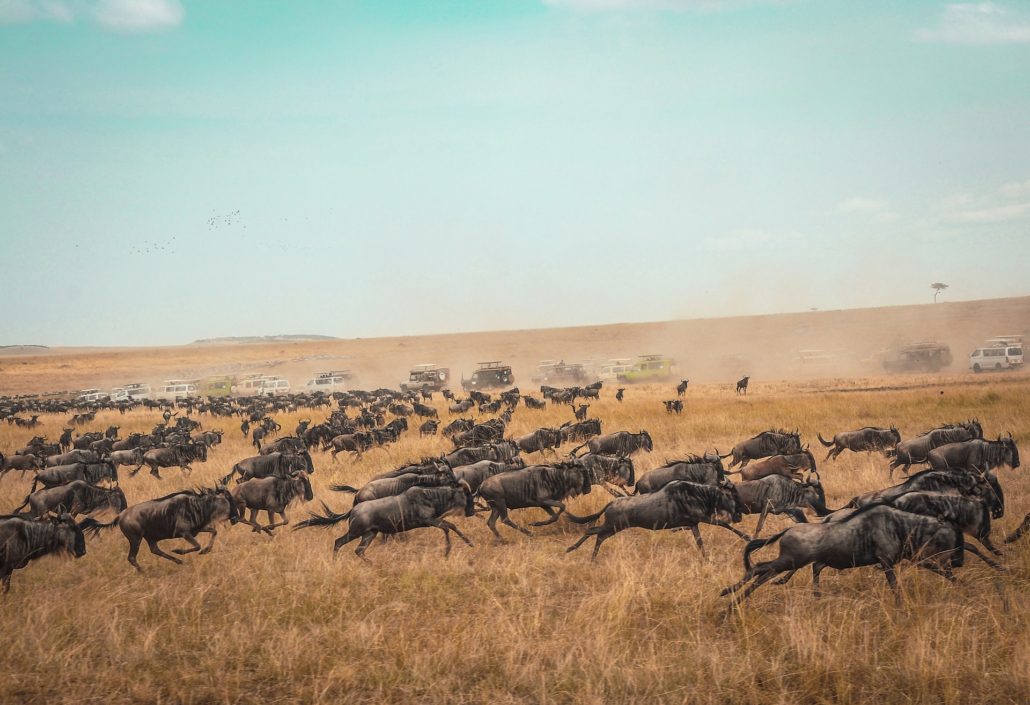
Witness The Annual Great Wildebeest Migration (One of the Seven Natural Wonders of Africa) in full force & in all its wilderness glory in the legendary Masai Mara National Reserve |
Dry Season: June – October | **More specifically, the period between mid-August & late October, when the herds of millions of wildebeest, zebra & antelope have returned from their months in Tanzania’s Serengeti, is the prime time to witness the Masai Mara Great Wildebeest Migration in action |
|
The Great Migration Grumeti River Crossing | **Millions of wildebeest, zebra & antelope cross the Grumeti River from the Grumeti region of the Serengeti towards the Northern Serengeti |
May – July |
|
The Great Migration Mara River Crossing | **Millions of wildebeest, zebra & antelope cross the crocodile-infested Mara River from the Northern Serengeti into Kenya’s Masai Mara National Reserve |
Late July / August – September |
|
Great time to see Africa’s predators up-close & in action | **Intense Big Cat Action |
January – March | June – September
|
| Peak safari season / Extraordinary wildlife sightings & encounters | **Kenya is deemed one of the best places in Africa to witness the iconic Big5, along with incredible sightings of rare & remarkable wildlife species that can only be found in this part of the world. In addition to Kenya’s pristine predator population & spectacular African Big5, it is also home to an abundant concentration & vast diversity of plains game | **Kenya promises to deliver the ultimate safari experience & African wildlife adventure of a lifetime |
Dry Season: June – October |
|
Calving Season (prime time to see new-born / baby animals in the wild) + Prime time for predator activity & sightings due to the abundance of new-born wildlife |
Green Season: November – May | **Especially January – March |
|
Great photography opportunities due to the beautiful, lush surrounding scenery & landscapes + fewer crowds + lower rates |
Late March – June (‘long rains’) | October – December (‘short rains’) |
|
Excellent time for bird watching (Boasting more than 500 recorded bird species, the Masai Mara is a great place to spot several of Kenya’s resident & rare & remarkable endemic & near-endemic bird species. These bird species are especially renowned & sought-after as they can only be found in Kenya & marginally beyond) |
Green Season: November – April |
|
Witness the famous Flamingo Migration in East Africa’s Rift Valley of Kenya & Tanzania | **The lakes of the Great Rift Valley in East Africa are a birdwatcher’s paradise |
April – June |

Experience |
Best Time |
|
Best time to witness the Serengeti Great Wildebeest Migration in the Western Corridor | The BEST months to see the magnificent wildebeest migration |
Dry Season: June – October | **Especially June & July + August & September |
|
The Great Migration Grumeti River Crossing | **Millions of wildebeest, zebra & antelope cross the Grumeti River from the Grumeti region of the Serengeti towards the Northern Serengeti |
May – July |
|
The Great Migration Mara River Crossing | **Millions of wildebeest, zebra & antelope cross the crocodile-infested Mara River from the Northern Serengeti into Kenya’s Masai Mara National Reserve |
Late July / August – September |
|
Great game viewing / Exceptional wildlife sightings & encounters (including Africa’s famous Big5) |
June – October | January – early March |
|
Start of calving season, as zebra begin to give birth in Tanzania’s Serengeti |
January – February |
|
Best time to see the wildebeest calving in the Southern Serengeti |
January – March |
|
Prime time for predator action & sightings due to the wildebeest calving & abundance of new-born wildlife |
January – March |
|
Bird watching is at its best as migrant birds are present & in breeding |
Green Season: November – May |
|
Peak game viewing + Best time / conditions to explore Tanzania’s other top National Parks & Reserves such as Tarangire, Ngorongoro, Ruaha & Selous |
June – October |
|
Witness the famous Flamingo Migration in East Africa’s Rift Valley of Kenya & Tanzania | **The lakes of the Great Rift Valley in East Africa are a birdwatcher’s paradise |
April – June |
|
Hiking Mount Kilimanjaro |
Mount Kilimanjaro is best hiked in the drier months between July & October or January – March |
|
Best time to visit Zanzibar as well as Tanzania’s Indian Ocean Coast & Islands |
Best time: July – August | **We’d recommend avoiding the coast during Tanzania’s ‘long rains’ of March – May |

Experience |
Best Time |
|
Best time for Trekking Mountain Gorillas in their natural habitat | **Best gorilla trekking destination in Rwanda: Volcanoes National Park |
Dry Seasons: Early June – late September | Mid-December – early February |
|
Excellent time for bird watching |
Great all year round but especially in the October – April summer months when migrant species are present |
|
Best time for Chimpanzee Trekking in Nyungwe Forest |
Dry Seasons: Mid-December – early February | Early June – late September |
|
Perfect for safaris across Africa / great game viewing |
June – October |

Experience |
Best Time |
|
Best time for trekking Mountain Gorillas in their natural habitat | **Easiest conditions for hiking in the rainforest + exceptional gorilla sightings + lowest malaria risk | **Best gorilla trekking destination in Uganda: Bwindi Impenetrable National Park & Mgahinga Gorilla National Park |
Dry Seasons: Early June – late September | Mid-December – early February |
|
Best time for Chimpanzee Trekking in Kibale Forest |
Dry Seasons: Early June – late September | Mid-December – early February |
|
Great time for game viewing (especially in Uganda’s big game destinations – Queen Elizabeth National Park & Murchison Falls National Parks |
Dry Seasons: December – March | June – October
**Best towards the end of the dry seasons: February & March + September – early October |
|
Excellent time for bird watching |
Bird watching in Uganda is fantastic all year round but is at its peak between November & April when migratory birds arrive |
|
Perfect for safaris across Africa |
June – October |


